

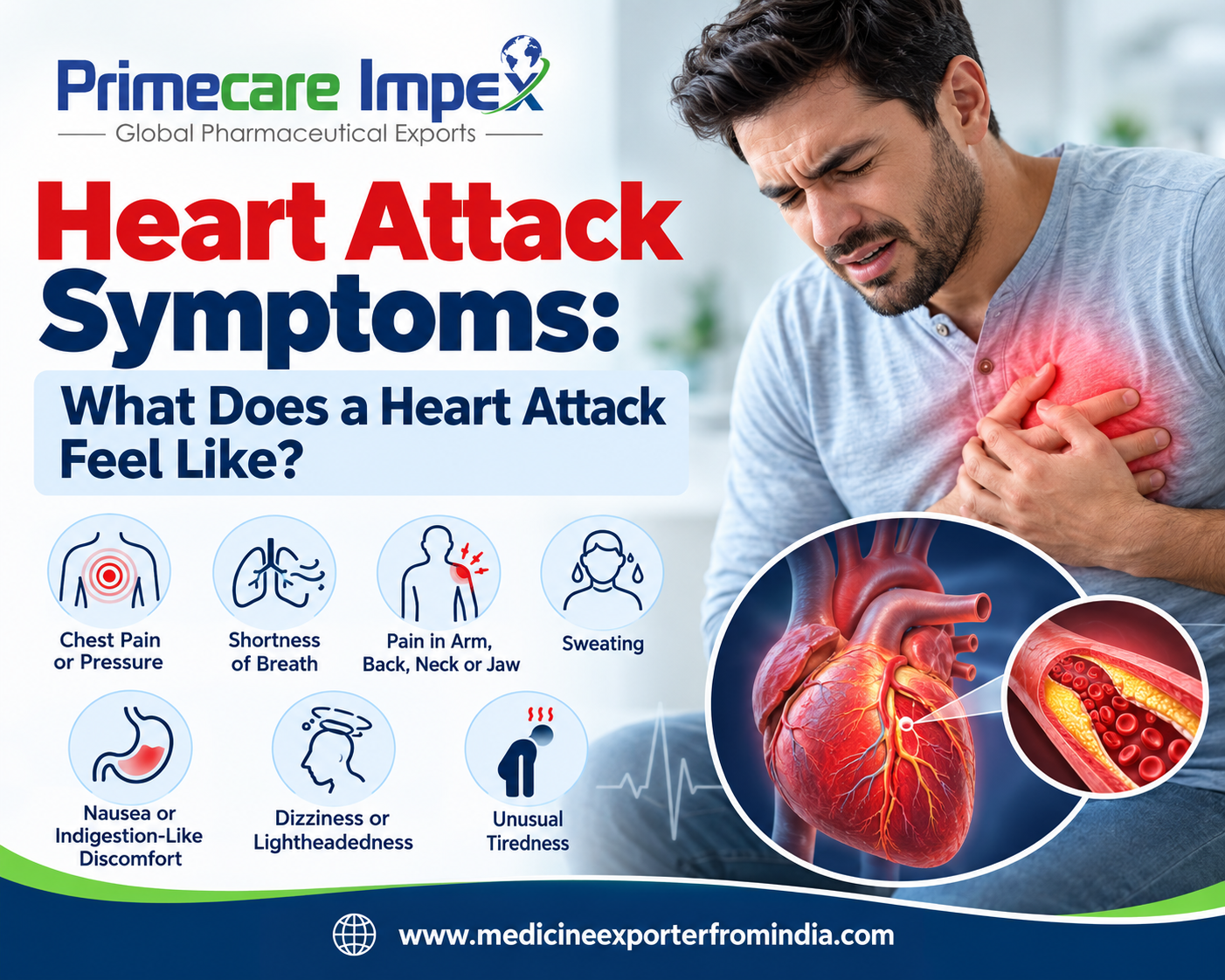
What Does a Heart Attack Feel Like? Common Symptoms
When people think of a heart attack, they often imagine sudden and severe chest pain. But it does not always happen that way. For some people, the warning signs are strong and easy to notice. For others, they may start slowly and feel like pressure, tiredness, indigestion, or shortness of breath. Knowing the common heart attack symptoms can make it easier to understand when something may be wrong. Chest discomfort is a common warning sign, but it is not the only one. A heart attack may also cause sweating, nausea, dizziness, breathing difficulty, unusual tiredness, or pain in the arm, shoulder, back, neck, or jaw.
What Happens During a Heart Attack?
The heart needs a steady supply of oxygen-rich blood to keep working properly. A heart attack happens when blood flow to part of the heart becomes blocked or greatly reduced. This can happen when an artery carrying blood to the heart becomes blocked, reducing the heart’s blood supply. If the blood supply is interrupted for too long, part of the heart muscle can become damaged. Quick medical care matters during a heart attack because waiting too long may cause further harm to the heart. The sooner a person receives medical care, the better the chance of limiting damage to the heart.
What Does a Heart Attack Feel Like?
Not everyone experiences a heart attack in the same way. Many people feel discomfort in the centre or left side of the chest. Instead of sharp pain, it may feel like something heavy is pressing on the chest.
Some people describe it as:
- Pressure
- Tightness
- Squeezing
- Heaviness
- Aching
- Fullness in the chest
The feeling may last for several minutes. It may also go away for a short time and then return. Not everyone has severe chest pain. Some heart attack symptoms can be mild, which can make them easier to overlook.
Common Symptoms of a Heart Attack
1. Chest Pain or Pressure
Chest pain during a heart attack does not always feel like a sudden, sharp pain. It may feel more like pressure, heaviness, squeezing, or tightness in the chest. Some people describe it as if a heavy object is sitting on their chest. The discomfort may stay for a few minutes or come and go. New chest pain or pressure should be taken seriously, especially when it appears with sweating, nausea, breathing problems, or pain elsewhere in the upper body.
2. Pain in the Arm, Back, Neck or Jaw
The discomfort from a heart attack may move beyond the chest. Pain may start in the chest and then spread towards either arm. It can also be felt in the shoulders, upper back, neck, jaw, or upper part of the stomach. Sometimes this discomfort may be more noticeable than the chest pain itself.
3. Shortness of Breath
Another possible warning sign is difficulty breathing. Shortness of breath during a heart attack may happen together with chest pain, but it can also happen without it. A person may suddenly feel out of breath even when they are resting or doing very little physical activity. If sudden breathing difficulty happens along with chest pressure, sweating, nausea, or dizziness, emergency medical help should be sought.
4. Sudden or Cold Sweating
A person having a heart attack may suddenly start sweating even when the weather is not hot and they have not been exercising. The skin may feel cold or clammy. Sweating by itself can happen for many reasons. However, sudden sweating together with chest discomfort or shortness of breath can be a warning sign.
5. Nausea or an Indigestion-Like Feeling
A heart attack does not always begin with noticeable chest pain. Some people feel sick, vomit, or experience discomfort in the upper stomach. The feeling can sometimes be mistaken for acidity, gas, or indigestion. This is one reason why some warning signs of a heart attack may be missed. If an unusual indigestion-like feeling appears with chest pressure, sweating, breathing difficulty, or pain in the arm or jaw, it is safer to get medical help quickly.
6. Dizziness or Feeling Lightheaded
Dizziness can happen for many reasons, including conditions such as headache or migraine, but sudden dizziness with chest discomfort needs medical attention.They may feel unsteady or as though they could faint. Dizziness has many possible causes, but when it suddenly appears with chest discomfort, sweating, nausea, or shortness of breath, it should not be ignored.
7. Unusual Tiredness
Feeling tired after a long day or poor sleep is normal. But unusual tiredness can sometimes be linked to a heart attack. A person may suddenly feel very weak or exhausted even though they have not done anything physically demanding. Unexplained tiredness is more concerning when other possible heart attack symptoms are also present.
Are Heart Attack Symptoms Different in Women?
Women can experience the same chest pain or pressure commonly linked with a heart attack. However, some women may notice other symptoms more clearly. Heart attack symptoms in women may include nausea, shortness of breath, unusual tiredness, weakness, back or shoulder discomfort, or an upset stomach. Because these symptoms can have many other causes, they may sometimes be overlooked. Severe chest pain is not present in every heart attack. Sometimes the warning signs are mild and may not seem serious at first.
Can a Heart Attack Feel Like Gas or Indigestion?
Sometimes it can. Heartburn, gas, and indigestion can cause discomfort or a burning feeling around the chest or upper stomach. In some cases, a heart attack can create pain or pressure around the chest or upper stomach, which may be mistaken for indigestion. It is not always easy to tell the difference based on the feeling alone. If chest or upper stomach discomfort is new, unusual, or happens together with sweating, shortness of breath, nausea, dizziness, or pain spreading to the arm or jaw, medical help should be sought quickly.
What Is a Silent Heart Attack?
In a silent heart attack, the warning signs may be very mild or easy to miss, so the person may not know that a heart attack has occurred. There may be no strong chest pain. Instead, the person might notice unusual tiredness, mild shortness of breath, nausea, back or jaw discomfort, or what feels like indigestion. Because the symptoms can be easy to miss, a person may not realize at the time that they have had a heart attack.
When Should You Get Emergency Help?
Do not wait for severe pain before asking for help. Emergency medical care is needed if someone develops symptoms such as:
- New or unexplained chest pain, pressure, or squeezing
- Chest discomfort that spreads to the arm, shoulder, neck, jaw, or back
- Sudden or severe shortness of breath
- Chest discomfort with sweating, nausea, dizziness, or weakness
- Fainting or becoming unresponsive
If you think you or someone else may be having a heart attack, contact your local emergency medical service immediately.
Frequently Asked Questions
1. What are the first signs of a heart attack?
The first signs of a heart attack may include chest pressure or discomfort, shortness of breath, sweating, nausea, dizziness, unusual tiredness, or pain that spreads to the arm, shoulder, back, neck, or jaw.
2. What does heart attack chest pain feel like?
It can feel like pressure, heaviness, squeezing, tightness, aching, or fullness in the chest. The feeling is not the same for everyone, and the pain does not always have to be severe.
3. Can you have a heart attack without chest pain?
Yes. A heart attack can happen without noticeable chest pain. A person may instead have shortness of breath, nausea, tiredness, dizziness, or discomfort in the arm, back, neck, or jaw.
4. Can heart attack symptoms come and go?
Yes. Some symptoms, including chest discomfort, may improve and then return. Symptoms should not be considered harmless simply because they disappear for a short time.
5. Can a heart attack feel like acidity or gas?
Sometimes heart attack discomfort can feel similar to heartburn, gas, or indigestion. It can be difficult to know the cause without medical assessment, especially when other warning signs are present.
6. What are common heart attack symptoms in women?
Women may have chest pain or pressure, but they can also experience shortness of breath, nausea, unusual tiredness, weakness, or discomfort in the back, shoulder, arm, neck, or jaw.