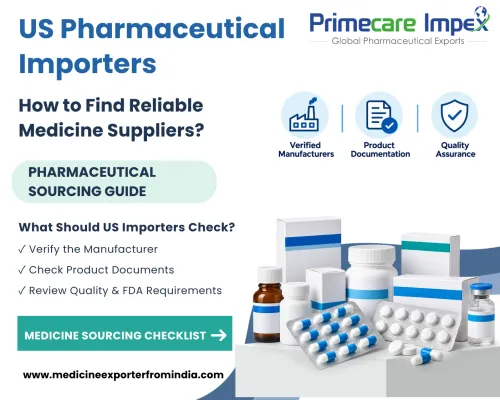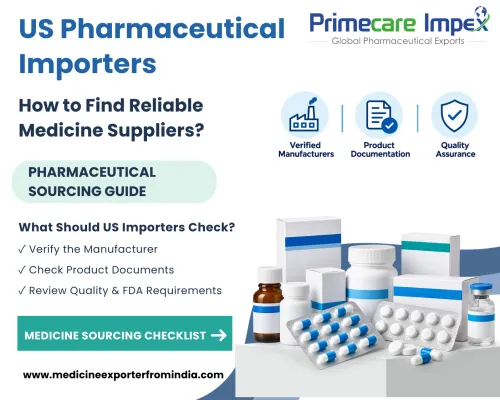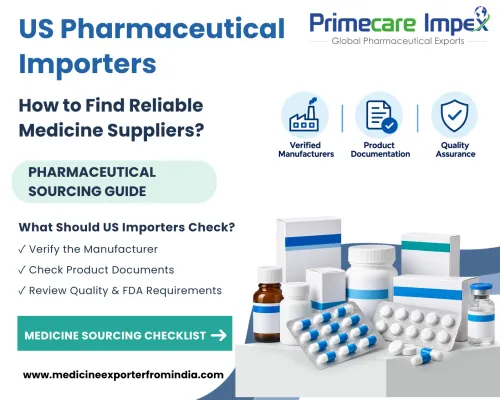

Introduction
Buying medicines from another country involves more than
finding a company that offers a good price. For pharmaceutical importers
in the United States, it is important to know where the medicines come from,
who manufactures them and whether they meet US import requirements. A
company may have a large product catalogue, but buyers still need to check its
background, product information and available documents. Taking time to
review these details can help avoid problems later.
1. Know What Medicines You Need
Before contacting a pharmaceutical company, it helps to
prepare a clear list of requirements. For example, asking only for a price
list may not give the seller enough information to prepare an accurate
quotation.
Buyers should share details such as:
- Medicine name
- Generic name or active ingredient
- Strength, such as 250 mg or 500 mg
- Tablet, capsule, injection or other dosage form
- Required quantity
- Preferred manufacturer, if any
- Packaging type
- Required shelf life
- Destination country
- Documents needed for import
These details make communication easier and help the company
check whether the requested medicine is available and suitable for the intended
market.
2. Find Out Who Makes the Medicine
Before choosing an overseas company, buyers should find out
who actually manufactures the product. Some companies manufacture
medicines in their own facilities. Others work with different manufacturers and
handle international sales or exports. Both may have a role in
pharmaceutical trade, but buyers should understand which company is responsible
for manufacturing.
Important things to check include:
- Manufacturer's name and address
- Manufacturing licence
- Available GMP documents
- Product manufacturing details
- Relevant inspection records
- Product-specific documents
Buyers should also check whether the documents are genuine
and still valid. A professional website can make a good first impression,
but it should not be the only reason to trust a company.
3. Check FDA Requirements Before Importing
Medicines imported into the United States must follow
applicable US Food and Drug Administration (FDA) rules. Not every medicine
sold in another country can be legally imported or marketed in the
USA. Depending on the product, requirements may include FDA marketing
approval, establishment registration, drug listing, correct labelling and
manufacturing standards. For example, some medicines require an approved
NDA or ANDA. Certain over-the-counter medicines may follow applicable OTC
monograph requirements. Before ordering, importers should check the
product's regulatory status and confirm that the proposed shipment is allowed
under US law. Official FDA information is useful for checking these
details.
4. Ask for Product Quality Documents
Medicine quality is an important part of pharmaceutical
purchasing. Before confirming an order, buyers should ask which documents
are available for the product.
Certificate of Analysis (COA)
A COA shows the results of quality tests carried out on a
particular batch of medicine. Depending on the product, it may include
information about its ingredients, strength, purity and other test results.
Manufacturing Documents
These may include manufacturing licences, relevant GMP
records and other documents related to the product.
Batch Number and Expiry Date
Batch numbers help identify medicines and support
traceability. Expiry dates show how much shelf life remains.
Packaging Details
Buyers should confirm whether the medicine comes in blister
packs, bottles, vials, ampoules or another suitable form. The documents
required will depend on the product and the rules of the importing country.
5. Pay Attention to How the Company Communicates
Good communication can make international purchasing much
easier. A company should be able to explain product details, availability,
documentation and payment terms clearly. Before placing an order, notice
how the company responds to questions.
For example:
- Does it answer questions clearly?
- Does it provide correct product information?
- Does it explain which documents are available?
- Does it give realistic timelines?
- Does it communicate openly when something is unavailable?
- Does it explain the terms before requesting payment?
Clear answers help buyers understand what to expect. It
is better to work with a company that gives accurate information than one that
promises everything without checking.
6. Don't Choose a Company Based Only on Price
A low price may look attractive, but it does not always mean
a better deal. Two companies may quote different prices because of
differences in packaging, manufacturer, order quantity or shipping
arrangements.
Before making a decision, buyers should compare:
Medicine Price: Check the price per tablet, strip,
bottle, vial or other unit.
Minimum Order Quantity: Find out how much must be
purchased.
Payment Terms: Understand when and how payment needs
to be made.
Packaging: Confirm the pack size and type.
Product Expiry: Ask about the remaining shelf life.
Shipping Terms: Check which costs and
responsibilities are included in the quotation.
Documents: Ask what paperwork can be provided.
Delivery Time: Understand how long order preparation
and transportation may take.
Comparing these details gives buyers a clearer picture of
the total purchase.
7. Check How Medicines Will Be Packed and Shipped
Medicines need suitable packaging and storage during
transportation. Some medicines can be stored at controlled room
temperature. Others need refrigeration or special handling.
Before arranging a shipment, buyers should check:
- Recommended storage temperature
- Type of shipping packaging
- Whether temperature control is needed
- Protection against damage
- Product labels
- Shipping documents
- Customs and import responsibilities
Temperature-sensitive medicines need extra attention because
unsuitable storage conditions may affect product quality. Shipping plans
should always match the manufacturer's storage instructions.
8. Make Sure the Medicines Can Be Traced
It should be possible to identify where a medicine came from
and which batch it belongs to. This is called product
traceability. Batch numbers, manufacturer details and appropriate records
can help businesses track medicines through the supply chain. In the
United States, the Drug Supply Chain Security Act (DSCSA) sets tracing and
verification requirements for certain prescription medicines. Importers
should understand which rules apply to their business and work with
appropriately authorised trading partners. Good recordkeeping can also
help if a product needs to be checked or recalled.
9. Watch for These Warning Signs
Some problems can be noticed before placing an order.
Missing Manufacturer Details
If a company cannot explain who makes the medicine, buyers
should ask for more information.
Claims Without Proof
Statements such as "FDA approved" should be
checked against official records for the specific product.
Unclear Product Information
A quotation should identify the medicine, strength, dosage
form, quantity and packaging.
Unrealistic Shipping Promises
International shipments may face delays due to transport,
documentation or regulatory checks. No company should promise customs
clearance without a proper basis.
Pressure to Pay Immediately
Buyers should have enough time to review the quotation,
product details and applicable requirements before making payment. These
warning signs do not always mean a company is unreliable, but they are reasons
to investigate further.
10. Why US Importers Look at Pharmaceutical Companies in
India
India has a large pharmaceutical manufacturing
industry. Indian manufacturers produce many types of medicines, including
tablets, capsules, injections and active pharmaceutical ingredients. This
gives international buyers a wide range of companies and products to
research. However, a medicine being manufactured in India does not
automatically mean it can be sold in the United States. US importers still
need to check the manufacturer, product approval status, quality documents and
applicable import rules. The right choice depends on the particular
medicine and the buyer's business requirements.
11. Pharmaceutical Sourcing Services at Primecare Impex
Primecare Impex is an India-based
pharmaceutical export business that handles international B2B medicine
enquiries. The company works with buyers who want to discuss medicine
availability, product specifications, packaging and commercial requirements.
Medicine Enquiries
Buyers can share the product name, strength, dosage form and
required quantity.
Product Information
Available manufacturer and product details can be discussed
based on the enquiry.
Packaging and Order Requirements
Buyers can explain their preferred packaging, order quantity
and other purchasing needs.
Export and Shipping Discussions
Shipping arrangements can be discussed after reviewing the
product, destination and applicable regulatory requirements. For US
enquiries, buyers must confirm that the medicine and proposed transaction meet
all relevant FDA and import requirements before shipment. Primecare Impex
focuses on clear communication and practical discussions about pharmaceutical
sourcing.
Benefits of Working With a Reliable Pharmaceutical
Sourcing Partner
Choosing a suitable business partner can make medicine
purchasing more organised.
Clear Product Information
Buyers can better understand what they are purchasing.
Better Planning
Knowing the quantity, packaging and expected preparation
time helps buyers plan their requirements.
Easier Communication
Clear answers can reduce misunderstandings between buyers
and exporters.
Proper Documentation
Discussing required paperwork early helps buyers identify
missing information before ordering.
Long-Term Business Relationships
Consistent service and communication can support future
purchasing discussions. These benefits depend on the companies involved
and do not guarantee product approval or successful import clearance.
Frequently Asked Questions
1. How do US pharmaceutical importers find reliable
medicine suppliers?
They can research manufacturers and exporters, check
business details, review product documents and confirm that the medicine meets
applicable US import requirements.
2. Can US companies import medicines from India?
Yes, certain medicines can be imported from India when the
product and transaction meet all applicable US legal and regulatory
requirements. Not every medicine available in India is eligible for commercial
import into the USA.
3. What documents should pharmaceutical importers check?
Depending on the medicine, buyers may need manufacturing
information, relevant GMP records, product specifications, batch documents and
applicable FDA approval or listing details.
4. Does FDA registration mean a medicine is
FDA-approved?
No. FDA establishment registration and drug listing do not
mean that a medicine has FDA marketing approval. Buyers should check the
specific product's regulatory status.
5. What makes a pharmaceutical exporter reliable?
Clear communication, accurate product details, genuine
documents, realistic commercial terms and attention to applicable regulations
are important factors.