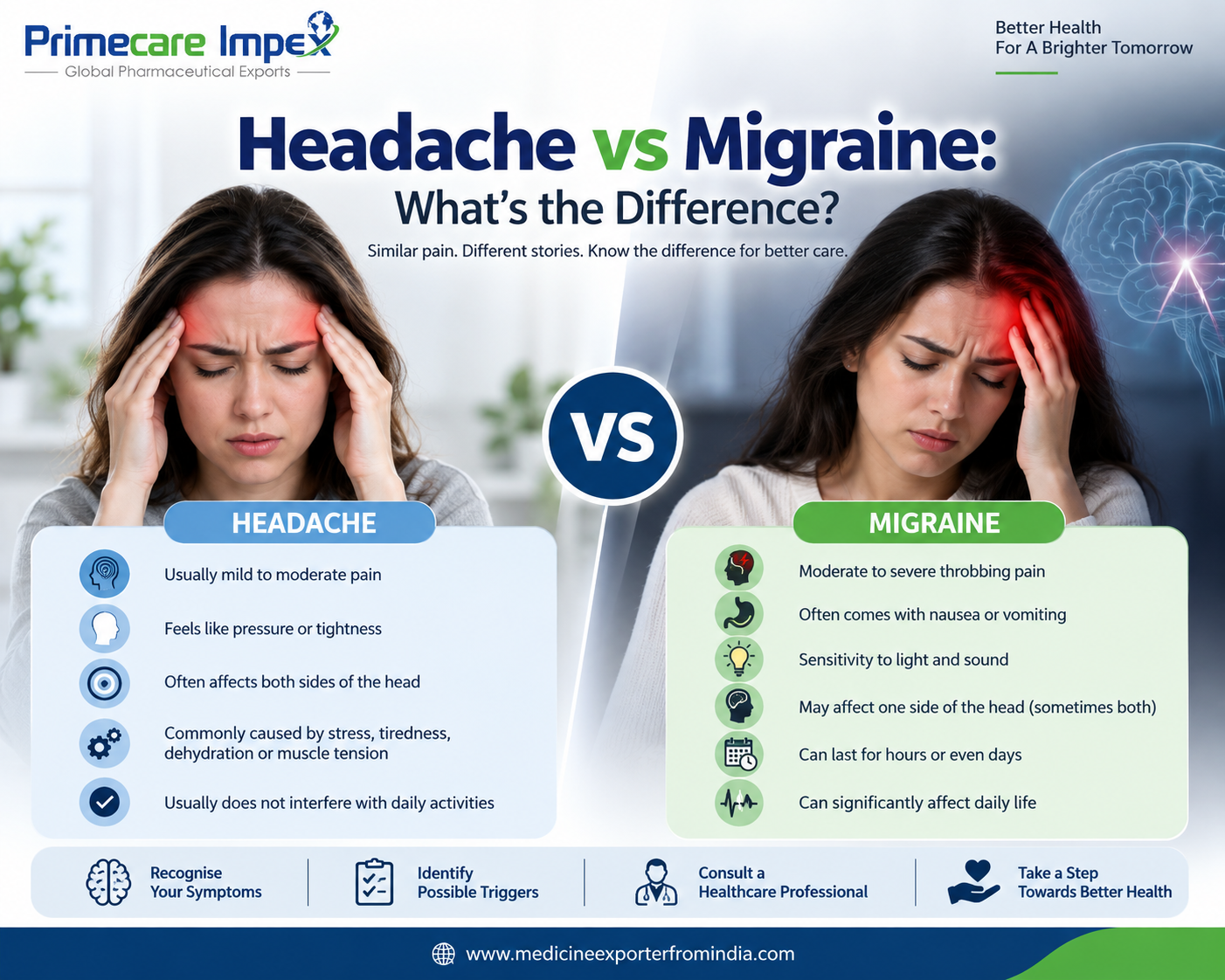
Headache or Migraine? How to Understand the Difference
Head pain can appear at the most inconvenient time. Maybe you have been staring at a laptop for hours and notice pressure building around your forehead. On another day, the pain may feel completely different—strong, pulsing and uncomfortable enough that you want to switch off the lights and lie down. Both experiences involve head pain, but they may not be the same problem. Knowing the difference between headache and migraine can make it easier to describe what you are experiencing and understand when medical advice may be needed. The location of the pain matters, but other symptoms such as nausea, sensitivity to light and the effect of physical activity can provide equally important clues. Headaches Can Feel Different for Different People
“Headache” is a general description rather than one specific condition. Head pain can develop in different areas and may feel like pressure, tightness, aching or occasionally a sharper sensation. Tension-type headaches are among the most familiar forms. People often describe them as a feeling of pressure around the forehead or as though something is gently squeezing the head. A headache may sometimes appear after a stressful day, inadequate sleep, missing a meal or not drinking enough fluids. Long periods of concentration and muscle tension can also contribute in some situations. However, recurring headaches should not automatically be blamed on stress or screen time. There are numerous causes of headache, and a healthcare professional can help evaluate persistent or changing symptoms. Migraine Is More Than Intense Head Pain
Migraine is a neurological disorder, and headache is only one part of the condition. A migraine attack often causes pulsating or throbbing pain that can become strong enough to interrupt normal activities. The discomfort frequently occurs on one side of the head, although some people experience pain on both sides. Typical migraine symptoms may include nausea, vomiting, sensitivity to bright light or noise, tiredness and difficulty concentrating. Walking, climbing stairs or performing other routine physical activities may make the pain feel worse. This combination of symptoms is one reason migraine can feel very different from an everyday headache. What About Migraine Aura?
Some people notice unusual neurological symptoms before or during a migraine attack. This is known as migraine aura. Visual symptoms are common and may include flashing lights, shimmering spots, lines or temporary changes in vision. Other people may notice tingling, numbness or changes in speech. Importantly, aura is not experienced by everyone who has migraine. A person can have migraine without ever experiencing an aura.
Headache vs Migraine: Key Signs to Compare
When considering headache vs migraine, looking at the overall pattern is often more useful than judging pain alone.
| What to notice | Tension-Type Headache | Migraine |
|---|
| Type of pain | Dull, pressing or tightening | Frequently pulsating or throbbing |
| Typical severity | Mild to moderate | Moderate to severe |
| Where it hurts | Often on both sides | Commonly one side, sometimes both |
| Nausea | Usually absent | May occur |
| Light and sound | Usually less troublesome | Sensitivity is common |
| Physical activity | Usually does not worsen pain | Can make symptoms worse |
| Aura | Not typical | Occurs in some people |
| Daily routine | Often manageable | May interrupt normal activities |
These are general patterns rather than a self-diagnosis checklist. Headache disorders do not always follow exactly the same pattern in every person.
Why Do Migraines Happen?
There isn't one universal reason why a migraine attack begins. Different people may notice different circumstances before their symptoms appear. Possible migraine triggers include disrupted sleep, emotional stress, missing meals, hormonal changes, strong smells, bright or flashing lights, changes in caffeine intake, alcohol and sometimes weather changes. One person might notice headaches after poor sleep, while another may find that irregular meals are associated with attacks. Some people may not identify an obvious trigger at all. Keeping a simple record can help. Note the date and time of the headache, what the pain felt like, how long it lasted and whether symptoms such as nausea or light sensitivity appeared. Information about sleep, meals and activities may also reveal patterns over several weeks.
Could Your Headache Actually Be a Migraine?
There is no reliable way to identify migraine simply by asking how painful a headache feels. Instead, think about what happens around the headache. For example, does the pain repeatedly throb rather than feel like pressure? Do you want to avoid bright rooms? Does noise become unusually uncomfortable? Do you feel sick to your stomach? Does walking around make the pain noticeably worse? A repeated combination of these features may be useful information to discuss with a doctor. Doctors generally assess migraine by considering symptoms, medical history and the pattern of attacks. Tests may sometimes be required to investigate other possible causes, depending on the individual situation.
Everyday Habits That May Help
There is no single routine that prevents every headache or migraine attack. Still, consistency in everyday habits can be helpful for some people. Getting regular sleep, staying adequately hydrated and avoiding long gaps between meals are sensible starting points. People who spend much of the day using digital devices may also benefit from regular breaks and attention to posture. If migraine develops, some individuals prefer resting in a quiet, darker room until symptoms settle. Treatment options vary depending on the type and frequency of headaches. Taking pain-relieving medicines too frequently can sometimes lead to medication-overuse headache, so frequent symptoms are worth discussing with a healthcare professional instead of continuously managing them on your own. When Is a Headache a Warning Sign?
Most headaches are not medical emergencies. Certain situations, however, should not be ignored. A headache that appears suddenly and becomes extremely severe requires urgent medical assessment. Immediate attention is also important when severe head pain occurs with symptoms such as fainting, confusion, seizures, weakness, numbness, difficulty speaking, major vision changes, fever with neck stiffness or following a significant head injury. You should also consider medical evaluation if your headaches become more frequent, start feeling different from your usual pattern or regularly interfere with work, sleep or everydayactivities.
Understanding Your Head Pain Is the First Step
The main distinction in headache vs migraine is not simply which one hurts more. A tension-type headache often feels like pressure or tightness and may allow you to continue your day. Migraine can involve throbbing head pain along with nausea, sensitivity to light or sound and worsening symptoms during physical activity. Rather than focusing only on pain intensity, notice the complete pattern—where the pain occurs, how it feels, what accompanies it, how long it lasts and what was happening before it began. Recognising these details can help you have a more useful conversation with a healthcare professional and find the appropriate approach for recurring head pain.
Frequently Asked Questions About Headache and Migraine
1. What is the main difference between a headache and a migraine?
A headache generally refers to pain or discomfort in the head. Migraine is a neurological condition that can cause head pain along with other symptoms such as nausea and sensitivity to light or sound.
2. How do I know if my headache could be a migraine?
A headache may resemble migraine when the pain is throbbing or pulsating, becomes worse with normal activity, or occurs together with nausea and sensitivity to light or sound. A healthcare professional can provide a proper diagnosis.
3. Can migraine pain occur on both sides of the head?
Yes. Migraine commonly affects one side of the head, but some people can experience pain on both sides.
4. How long can a migraine attack last?
The duration varies between individuals. An untreated migraine attack may last several hours and, in some cases, continue for a few days.
5. What are common migraine triggers?
Possible migraine triggers include stress, irregular sleep, skipped meals, hormonal changes, bright lights, strong smells, alcohol and changes in caffeine intake. Triggers can vary considerably from person to person.
6. Does every person with migraine experience an aura?
No. Many people have migraine without aura. When aura does occur, it may involve temporary visual disturbances, tingling, numbness or other neurological symptoms.
7. Can dehydration cause headaches?
Dehydration can contribute to headaches in some people. Maintaining adequate fluid intake is one part of a healthy daily routine, although recurring headaches can have many possible causes.
8. Can too much screen time cause headaches?
Long periods of screen use may be associated with eye strain, poor posture or muscle tension, which can contribute to head discomfort. Regular breaks and an appropriate workstation setup may help.
9. When should I see a doctor about frequent headaches?
Consider medical evaluation when headaches become frequent, severe, change from your usual pattern, or regularly interfere with work, sleep or everyday activities.
10. When does a headache require urgent medical attention?
Seek urgent medical care for a sudden and extremely severe headache or a headache accompanied by symptoms such as confusion, fainting, seizures, weakness, numbness, difficulty speaking, significant vision changes, fever with a stiff neck, or after a serious head injury.