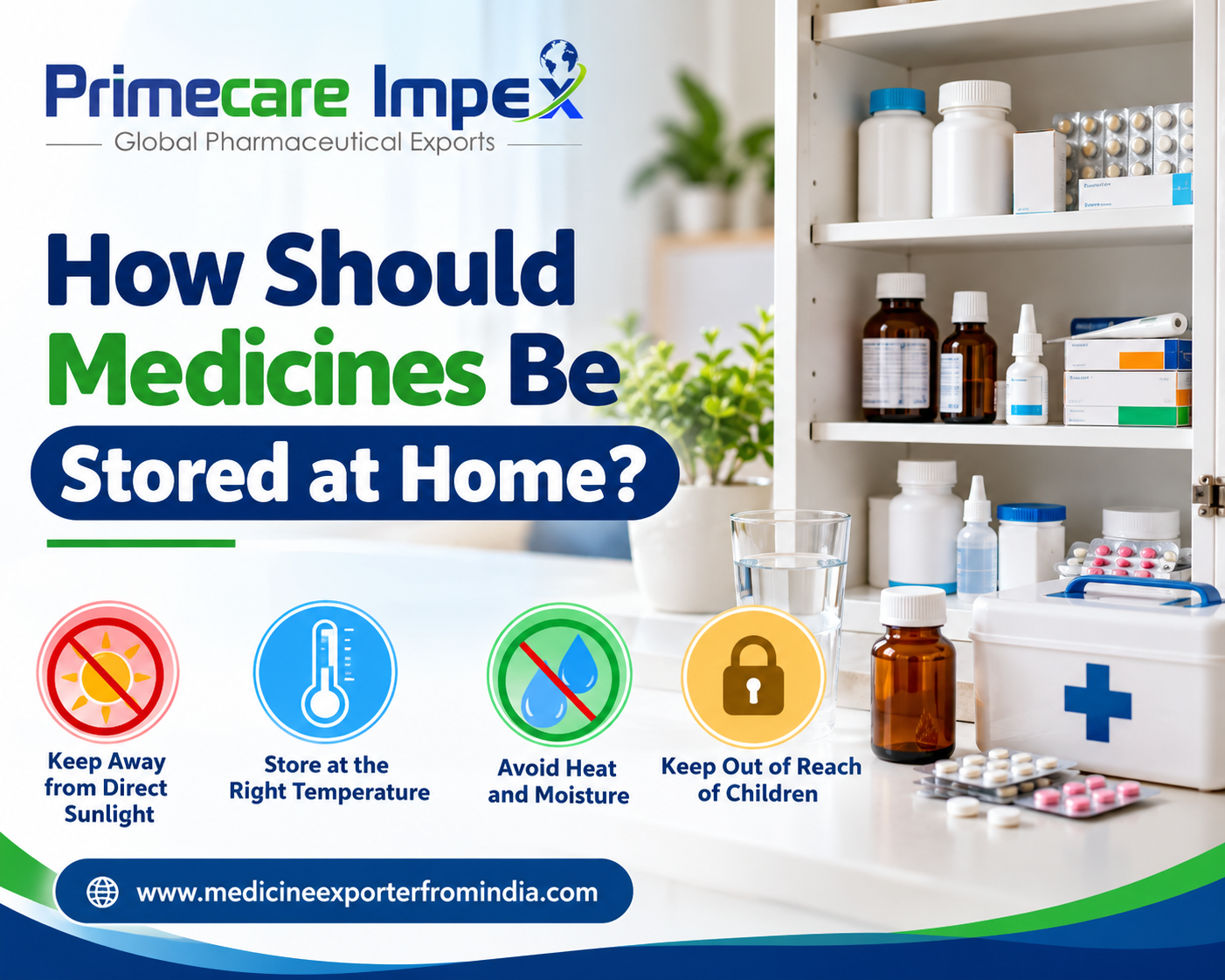
Almost every home keeps a few medicines for common health needs, emergencies, or regular treatment. It may include tablets for fever or pain, prescription medicines, cough syrup, eye drops, creams, vitamins or medicines used regularly by family members. But have you ever checked where these medicines are kept? A bathroom cabinet, kitchen shelf or sunny windowsill may seem convenient, but heat, moisture and light can affect some medicines. Knowing how to store medicines at home is therefore an important part of everyday medicine safety. The good news is that proper medicine storage does not have to be complicated. A few simple habits can help protect your medicines and your family. Why Does Medicine Storage Matter?
Storing medicines correctly helps protect their quality and keeps them in good condition for their intended use. Exposure to excessive heat, moisture, direct sunlight or unsuitable temperatures may affect the quality of some products. This is why medicine packs often include instructions such as “store below 25°C,” “protect from light,” “keep in a cool and dry place,” or “store in a refrigerator.” Always treat the instructions on the medicine label or patient information leaflet as the first source of guidance. Choosing the Right Place to Store Medicines at Home
For many medicines, a dry cupboard or drawer away from direct sunlight and heat is a practical choice. A bedroom cupboard or another secure storage area can work well, provided it does not become excessively hot or humid.
- Dry and protected from moisture
- Away from direct sunlight
- Away from heaters and other heat sources
- Not exposed to frequent temperature changes
- Keep out of children's reach
- Secure from pets
Remember that different medicines can have different requirements, so always check the individual pack.
Why Bathroom Storage Can Be Risky for Medicines
Despite the familiar name “medicine cabinet,” the bathroom is generally not an ideal place for many medicines. Hot showers and baths can increase humidity and cause frequent changes in temperature. Moisture may affect certain tablets, capsules and other formulations over time. If your medicines do not specifically require bathroom storage, consider keeping them in a cool, dry and secure cupboard elsewhere in the home.
What About the Kitchen?
The kitchen can also present storage problems. Cupboards close to a stove, oven, kettle or sink may be exposed to heat, steam or moisture. If you use a kitchen cupboard for medicines, choose one well away from cooking appliances, water and direct sunlight. Convenience is useful, but stable storage conditions are more important.
What Temperature Should Medicines Be Stored At?
Not all medications have a certain ideal temperature. Many medicines are designed for storage at normal or controlled room temperature, but the exact requirement can vary. A label might say “store below 25°C,” “store below 30°C” or give another specific range. That is why medicine storage temperature should always be based on the instructions supplied with the individual product. During very hot weather, pay extra attention to medicines stored in rooms that become unusually warm. Avoid leaving medicines inside parked cars, near windows or other places where temperatures can rise significantly. When Does a Medicine Need Refrigerated Storage?
Not automatically. One common mistake is assuming that refrigeration will help every medicine last longer. Some products require refrigeration, while others are intended to remain at room temperature. Medicines that require cold storage should have this stated on their label or packaging. Some refrigerated medicines are stored between 2°C and 8°C, depending on the product. For safe medicine storage in refrigerator conditions, follow the specific product instructions. Do not freeze a medicine unless its instructions specifically require freezing. If a refrigerated medicine has accidentally been left outside the refrigerator, do not simply assume that it is unusable or safe to continue using. Ask a pharmacist or healthcare professional for product-specific advice. Keep Medicines in Their Original Packaging
Original packaging does more than make a medicine look organised. It provides important information such as the medicine name, strength, expiry date, dosage instructions and storage requirements. Some packaging also protects the medicine from moisture and light. Keeping different medicines together in an unlabelled container can also increase the risk of confusion. Unless a healthcare professional has advised otherwise, keeping medicines in their original labelled packaging is usually the safer option.
Keep Medicines Away From Children and Pets
Safe storage of medicines is not only about temperature. Medicines, vitamins and supplements should be stored where young children cannot see or reach them. Child-resistant caps should be properly closed after every use, but they should not be treated as completely child-proof. Avoid leaving medicines on bedside tables, countertops or inside easily accessible bags. It is also helpful to teach children that medicine is not candy and should only be taken when given by a responsible adult.
Check Expiry Dates Regularly
A simple medicine-cabinet check every few months can prevent old products from accumulating. Look at expiry dates and also examine the condition of the medicine and packaging. If tablets have changed appearance, packaging is damaged, liquids look unusual, or you are unsure whether a medicine has been stored correctly, ask a pharmacist before using it. Do not use a medicine simply because it “looks okay” if its expiry date has passed.
A Simple Home Medicine Storage Routine
Good medicine safety at home can become part of your normal household routine. Choose one secure storage location for most room-temperature medicines. Keep products in their original packs, check labels before storing them, return them to their proper place after use and periodically review expiry dates. For medicines requiring special temperatures or protection from light, follow the product-specific instructions carefully. Frequently Asked Questions (FAQs)
1. How should medicines be stored at home?
Most medicines should be kept in a cool, dry place away from direct sunlight, heat and moisture. Always follow the storage instructions printed on the medicine label or packaging.
2. What is the best place to store medicines at home?
A secure cupboard or drawer in a dry area is usually suitable for medicine storage at home. Keep medicines away from children, pets, direct sunlight and sources of heat.
3. Can medicines be stored in the bathroom?
Bathrooms are generally not ideal because heat and humidity can affect some medicines. Unless the product instructions say otherwise, choose a cool and dry storage area.
4. Should medicines be kept in the refrigerator?
Only medicines that specifically require refrigeration should be refrigerated. Always check the label because medicine storage temperature varies between products.
5. Can medicines be stored in the kitchen?
They can be stored in a suitable kitchen cupboard, but it should be away from the stove, oven, sink and other sources of heat or moisture.
6. Why should medicines be kept in their original packaging?
Original packaging contains important information such as the medicine name, strength, expiry date and storage instructions. It may also help protect the medicine from light and moisture.
7. What happens if medicine gets too hot?
Excessive heat can affect the stability or quality of certain medicines. If a medicine has been exposed to unusually high temperatures, ask a pharmacist whether it is still suitable to use.
8. How can medicines be stored safely around children?
Keep all medicines, vitamins and supplements out of the sight and reach of children, preferably in a secure or locked location. Close child-resistant packaging properly after every use.
9. How often should I check medicines stored at home?
It is useful to review your home medicines every few months. Check expiry dates, packaging condition and whether each medicine has been stored according to its instructions.
10. What should I do if I am unsure about a medicine's storage requirements?
Check the product label and patient information leaflet first. If the instructions are unclear or the medicine was stored incorrectly, contact a pharmacist or healthcare professional before using it.