

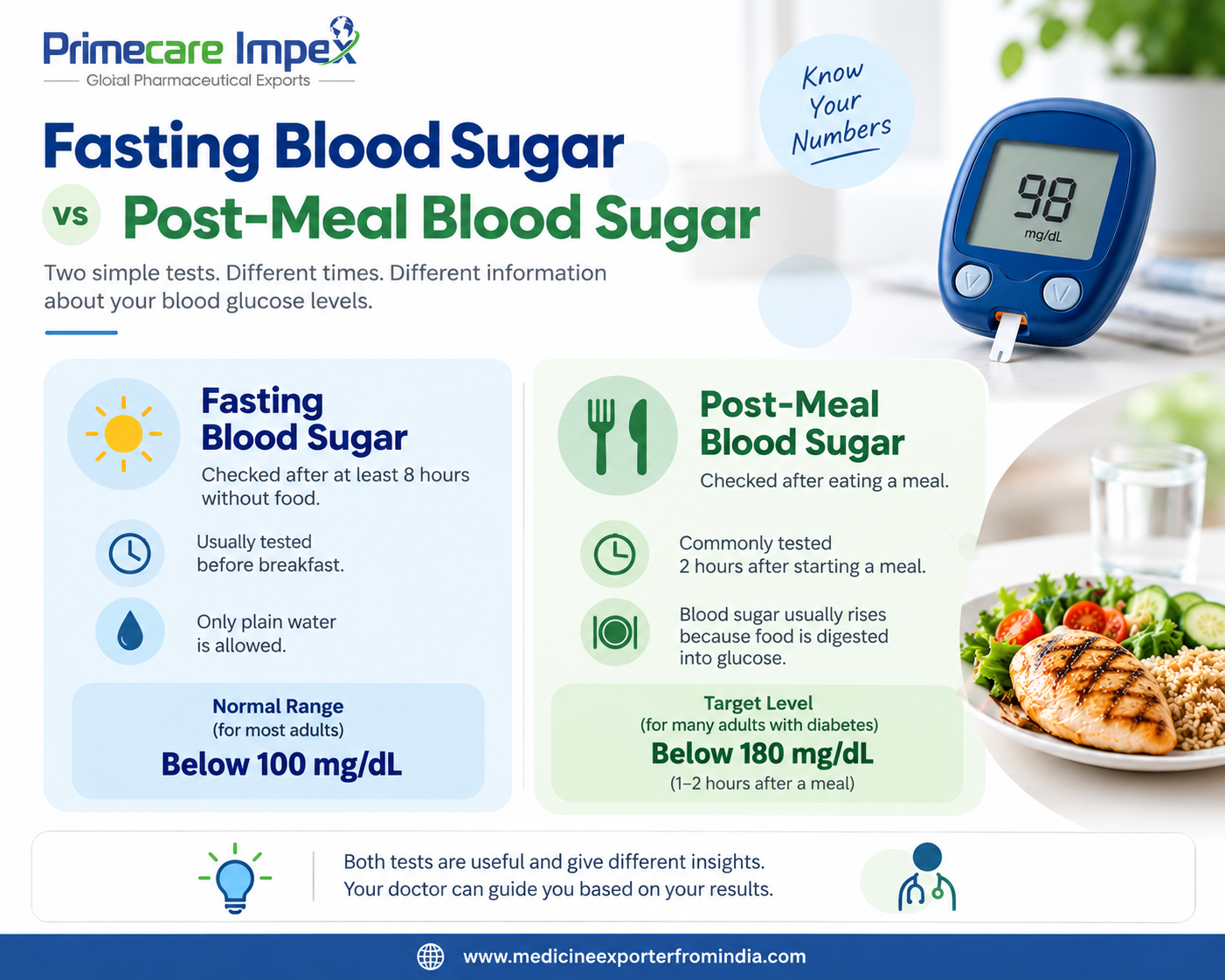
Fasting blood sugar vs post-meal blood sugar
Do you notice your blood glucose reading is different in the morning and after lunch? That’s because the amount of glucose in your blood varies depending on when and what you eat. Glucose is what your body uses for energy.But having blood sugar levels that are too high for long periods of time can affect your health. Two common tests are the fasting blood sugar test and the post meal blood sugar test.They both measure glucose , but they tell us different things about how the body handles sugar. Understanding what the difference is between fasting and post-meal blood sugar can help you understand test results and spot when you might need to get medical advice.
1. What Does Fasting Blood Sugar Mean?
Fasting Blood Sugar (FBS) is a measure of the level of glucose in your blood after not eating for at least eight hours. Most people do this test early in the morning before having breakfast. During the fasting period, you should not eat or drink anything with calories.Plain water is usually allowed. A fasting blood glucose test is often recommended by doctors when testing for diabetes or prediabetes.This helps illustrate how the body handles blood sugar when food has not been consumed for several hours.
2. What Is a Post-Meal Blood Sugar Test?
After eating, your blood sugar usually goes up.This is because carbohydrates are broken down by the body and converted into glucose. A post-meal blood sugar test (also known as a postprandial blood sugar test or PPBS) is a test that measures the amount of glucose in your blood after you eat. Insulin is a hormone made by the pancreas that allows glucose to enter the body's cells to provide energy. In the case of routine diabetes surveillance, blood sugar levels are often checked an hour or two after the first bite of food. A 2-hour post-meal blood sugar test can give doctors an idea of how well glucose is being controlled after eating.
3. How Are Fasting and Post-Meal Blood Sugar Different?
The biggest difference is when does the test come?One you do on an empty stomach, and the other one after a meal. Fasting blood sugar Postprandial blood sugar checked after at least 8 hours fasting Checked after having a meal Typically tested in the morning Generally checked 2 hours after starting a meal Displays glucose levels without recent eating. Shows how glucose changes after eating Helps detect pre-diabetes and diabetes Helps monitor blood sugar post-meal Includes typical lab reference ranges Your own health needs determine the targets Both tests can be useful in the evaluation of blood glucose levels but one test does not substitute the other.
4. What Should Your Fasting Blood Sugar Level Be?
A normal fasting blood sugar level generally falls below 100 mg/dL in adults who are not pregnant. Doctors use laboratory results to determine whether fasting glucose is within the expected range. Fasting Blood SugarWhat It May IndicateBelow 100 mg/dLNormal range100–125 mg/dLPrediabetes range126 mg/dL or above Diabetes range A reading of 126 mg/dL or higher does not always mean diabetes can be diagnosed from one test alone. Doctors usually confirm the result with additional laboratory testing. These ranges are used for laboratory fasting plasma glucose tests. Home glucose meters are useful for monitoring but are not normally used on their own to diagnose diabetes.
5. What Is a Healthy Blood Sugar Level After Meals?
After eating food especially carbohydrates blood sugar will naturally rise. In people without diabetes, the body usually releases enough insulin to help bring glucose levels back down. A common target blood sugar after a meal for many adults with diabetes is less than 180 mg/dL one to two hours after beginning a meal. But this goal isn’t for everyone. It is also important to understand that a regular post-meal glucose reading is different from an oral glucose tolerance test. During a standard 75-gram oral glucose tolerance test, a two-hour reading below 140 mg/dL is considered normal for nonpregnant adults. Your doctor can tell you which of these blood sugar ranges applies to your test and condition.
6. What Causes Blood Sugar to Increase After Eating?
Think about what happens after you eat rice, bread, potatoes, or other foods containing carbohydrates. Your digestive system breaks down much of the carbohydrate into glucose. This glucose then moves into your bloodstream. The pancreas releases insulin to help your cells absorb and use it.
Here are some common things that may affect your blood sugar after you eat:
Food choices: Meals with higher carbohydrates may lead to more of a glucose spike.
Portion sizes: Eating larger quantities can affect blood sugar readings.
Physical activity: Movement helps the body use glucose.
Stress: Stress hormones can change blood glucose levels.
Medicines: Some medicines can raise or lower blood sugar.
Inresponse to insulin: If insulin is not working well the glucose may be high for longer
You would expect it to go up after a meal.The worry comes when glucose readings are consistently higher than the recommended range.
7. Why Do Doctors Sometimes Recommend Both Tests?
So someone could have a normal fasting glucose reading, but still have higher blood sugar after eating. This is why doctors might suggest testing glucose at various times. The fasting blood sugar test tells us about the control of glucose after several hours without food. The blood sugar test after a meal is helpful in showing what happens after the body receives glucose from a meal. You may also be asked to undergo an HbA1c test, which estimates your average blood glucose levels over the past two to three months. Looking at different test results side by side gives a better idea of how well a person’s blood sugar is controlled.
8. Everyday Habits That Support Healthy Blood Sugar
Small changes in daily routines can help support healthier glucose levels.
Choose balanced meals: Include vegetables, whole grains, suitable protein sources, and fibre-rich foods.
Watch sugary drinks: Regularly drinking sweetened beverages can add large amounts of sugar to the diet.
Keep moving: Walking and other physical activity makes the body use glucose.
Get enough sleep: Poor sleep can affect the way the body manages blood sugar.
Follow medical advice: If you have diabetes, take prescribed medicines and check glucose as recommended.
Get health checkups: Regular monitoring allows for the detection of changes in blood sugar levels.
People using insulin or medicines that can cause low blood sugar should seek medical guidance before making major changes to food intake or exercise.
9. When Should You Get Your Blood Sugar Checked?
Not all people with high blood sugar will have symptoms right away. Sometimes changes are noticed during a routine health check. However, certain symptoms may suggest that blood glucose needs to be checked.
These include:
Feeling thirsty more often than usual
Passing urine frequently
Feeling tired without a clear reason
Experiencing blurred vision
Losing weight without trying
If these symptoms continue, speak with a healthcare professional. If you have very high blood sugar with vomiting, stomach pain, confusion, or unusual breathing, contact a health care professional immediately. Early testing is useful to identify problems and direct appropriate management.
10. Frequently Asked Questions: Blood Sugar
Q1. Can fasting blood sugar be normal while post-meal sugar is high?
Uh-huh. Blood sugar may be normal when you wake up but then rises too high after meals. A doctor can recommend further tests if needed.
Q2. Is drinking water allowed before a fasting glucose test?
Generally, you can drink plain water before fasting blood glucose test. Avoid tea, coffee, juice, and other drinks unless the laboratory gives different instructions.
Q3. How long after eating should blood sugar be tested?
During routine diabetes monitoring, glucose is often measured 1-2 hours after the start of a meal.Follow the timing your doctor advises.
Q4. Does eating rice or bread increase blood sugar?
Carbohydrates are broken down into sugars during digestion. Rice, bread and other carbohydrate foods can raise blood glucose.The rise can be affected by how much you eat and what you eat.
Q5. Is HbA1c same as fasting blood sugar?
No. A fasting blood sugar test measures glucose at one particular time, while an HbA1c test reflects average blood glucose over approximately two to three months.
Conclusion
Your blood sugar does not remain at exactly the same level throughout the day. It’s different when you eat, move, sleep and do the everyday things. A fasting blood sugar test measures glucose levels after a period without food.Postprandial (after-meal) blood sugar test: Measures the changes in glucose after a meal. Both can be useful sources of information, especially for people with diabetes or those being tested for diabetes.
Understanding your results and your doctor’s advice can help you feel confident about making decisions about your health.