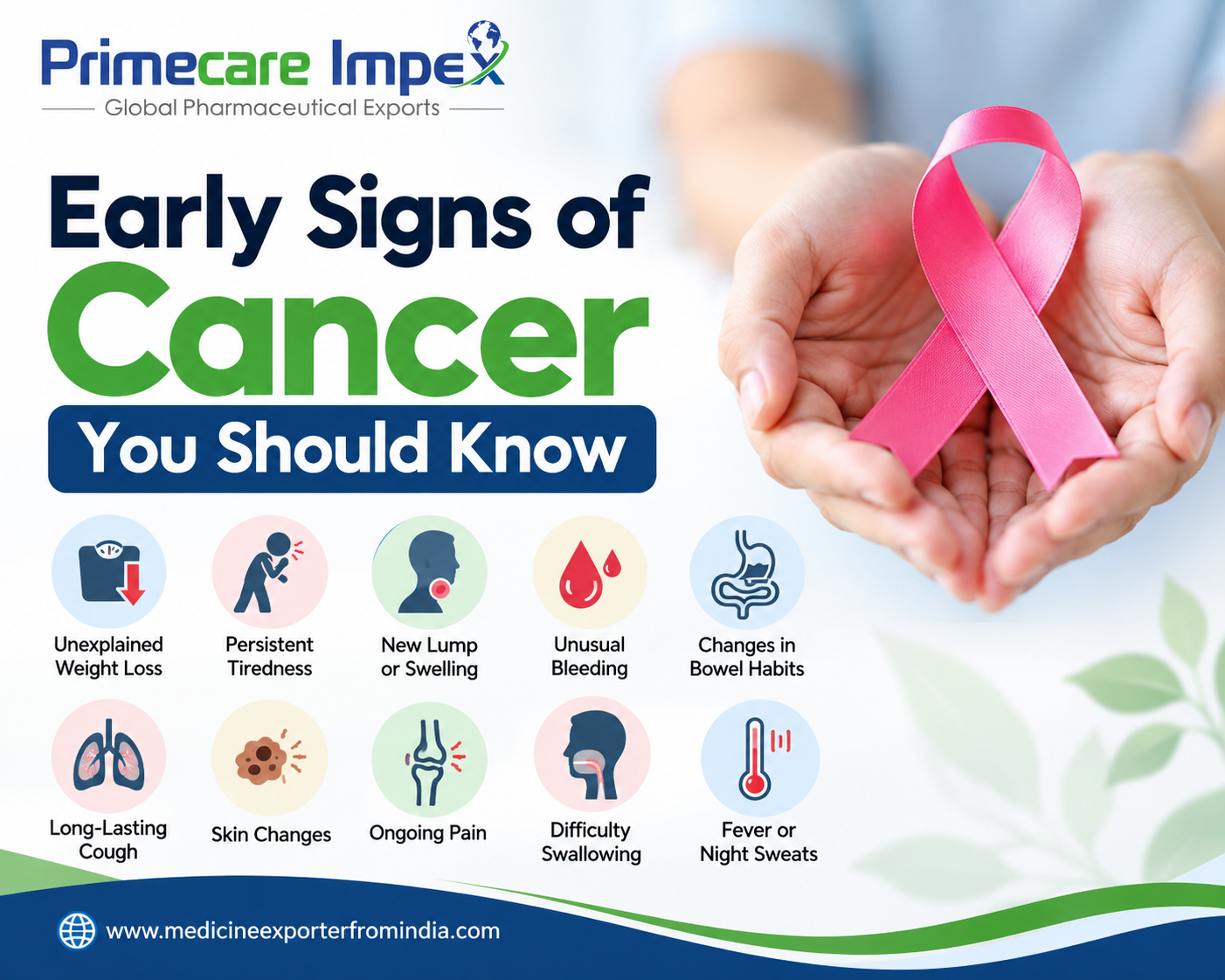
Early Signs of Cancer You Should Know
Cancer at an early stage does not often produce clear symptoms. Some changes can be very small and may seem like normal health problems. Feeling tired for no clear reason, losing weight without trying, finding a new lump, or having a cough that stays for a long time can happen for many different reasons. You do not always have cancer if you experience any of these symptoms. Many early warning signs of cancer can also be linked to common health conditions. However, if you notice something unusual in your body that does not improve, keeps coming back, or becomes worse, it is better to get it checked. 1. Weight Loss Without Trying
Losing some weight can be normal if you have changed your diet, started exercising, or made other lifestyle changes. But unexplained weight loss means losing weight even when you are not trying to. There can be many reasons for this, such as thyroid problems, digestive conditions, infections, stress, or other health issues. Unexplained weight loss can be related to certain types of cancer. If you continue to lose weight for no apparent cause, especially if you are experiencing other strange health changes, you should consult a doctor. 2. A New Lump or Unusual Swelling
If you notice a new lump or swelling on your body, keep an eye on it. This is especially important if the lump does not go away or seems to be getting bigger. A lump may develop in areas such as the:
- breast
- neck
- underarm
- groin
- abdomen
- testicles
A lump does not always mean cancer. Lumps can also result from cysts, infections, or swollen lymph nodes.However, it is difficult to know the cause just by touching or looking at it. A doctor can examine the lump and suggest further tests if necessary.
3. Feeling Tired All the Time
It is normal to feel tired after a busy day, poor sleep, exercise, stress, or illness. But persistent fatigue is different. You may continue feeling weak or tired even after getting enough sleep and rest. Sometimes, this tiredness can also make it difficult to carry out your usual daily activities. Long-lasting tiredness can happen because of anemia, infections, nutritional problems, and many other conditions. It may also occur with some cancers. If you regularly feel unusually tired without knowing why, it is worth discussing with your doctor.
4. Bleeding Without a Clear Reason
Unusual bleedingcan happen for several reasons, but it should not be ignored if there is no clear explanation. Examples include:
- blood in your urine
- blood in your stool
- coughing up blood
- unusual vaginal bleeding
- unexplained bleeding or bruising
These symptoms do not always indicate cancer. For example, blood in the stool can sometimes happen because of hemorrhoids or other digestive conditions. Still, bleeding that keeps happening or has no known cause should be checked by a healthcare professional.
5. Changes in Your Bowel or Bladder Habits
People usually know what feels normal for their body. If your usual bowel or bladder habits suddenly change and stay different, pay attention.
Changes in bowel habits may include:
- ongoing constipation
- frequent diarrhea
- changes in the shape or appearance of stool
- blood in the stool
Changes related to urination may include:
- urinating more or less often than usual
- pain or burning while urinating
- difficulty passing urine
- blood in the urine
Diet, infections, medicines, and many other conditions can cause these problems. However, if the changes continue or keep returning, speak with your doctor.
6. A Cough or Hoarse Voice That Stays
Coughing is very common. Colds, allergies, infections, smoke, or irritation can all cause a cough. However, a persistent cough that does not improve should be checked, especially when there is no obvious reason for it. The same applies to a hoarse voice that lasts longer than expected. Medical advice is particularly important if the cough happens along with other symptoms such as coughing up blood, difficulty breathing, unexplained weight loss, or ongoing chest discomfort.
7. Changes in Your Skin
It is important to pay attention to any new or unusual changes in your skin.
Watch for:
- a new mole
- a mole that starts changing
- changes in the colour, size, or shape of a mole
- a new or unusual skin growth
- a sore that does not heal
Most skin changes are not cancer. Still, if you notice something new or an existing spot begins to look different, a healthcare professional can check it properly.
8. Pain That Does Not Go Away
Pain is very common and can have many different causes. Having pain does not automatically mean that you have cancer.
However, persistent unexplained pain should not be ignored.
Pay attention if pain continues for a long time, becomes stronger, keeps returning, or appears without a clear reason. Tell your doctor where the pain occurs, how long you have had it, and whether it is becoming worse. This information can help identify the possible cause.
9. Difficulty Swallowing or Changes in Eating
Occasional indigestion or trouble swallowing can happen to many people. But if the problem continues, it may need medical attention.
Possible symptoms include:
- difficulty swallowing food or drinks
- indigestion that does not improve
- loss of appetite
- feeling full after eating only a small amount
- ongoing discomfort in the abdomen
There are many possible reasons for these symptoms, including common digestive problems. If they continue, return frequently, or become worse, speak with a healthcare professional.
10. Fever or Night Sweats Without a Clear Cause
Fever commonly happens when your body is fighting an infection. However, a fever that keeps returning without an obvious reason should be discussed with a doctor. Heavy or unusual night sweats may also need attention, particularly when they happen together with other symptoms such as unexplained weight loss, unusual tiredness, or swelling.
When Should You Talk to a Doctor?
The main thing is to notice changes that are new, unusual, unexplained, long-lasting, or getting worse. You do not need to wait until a symptom becomes painful or serious before seeking medical advice. Some health conditions, including certain cancers, may not cause pain in the early stages. At the same time, noticing one symptom does not mean you should immediately assume cancer. Many of the symptoms mentioned above are commonly caused by other conditions. A doctor can review your symptoms and health history. If needed, they may suggest blood tests, scans, a physical examination, or other tests to understand what is causing the problem.
Why Is Cancer Screening Important?
Knowing the possible cancer warning signs is useful, but not every cancer causes noticeable symptoms at an early stage. This is where cancer screening can play an important role.Depending on factors such as your age, sex, family history, personal health history, and individual risk, your healthcare provider may recommend certain screening tests. Talk with your doctor about which screening tests may be suitable for you and when you should have them.
Frequently Asked Questions
1. What are some common early warning signs of cancer?
Possible warning signs include unexplained weight loss, a new lump, unusual bleeding, ongoing tiredness, changes in bowel or bladder habits, a persistent cough, unusual skin changes, and pain that does not go away.
2. Does having one of these symptoms mean I have cancer?
No. Most of these symptoms can also happen because of other health conditions. Only proper medical evaluation can help identify the cause.
3. Can someone have cancer without noticing any symptoms?
Yes. Some cancers may not cause clear symptoms in their early stages. This is one reason why recommended screening can be important.
4. Should I worry if I am losing weight without trying?
Unexplained weight loss can happen for many reasons and does not always mean cancer. However, if you continue losing weight without knowing why, speak with a healthcare professional.
5. Should I get a lump checked even if it does not hurt?
Yes. A new lump that stays or grows should be checked by a healthcare professional, even when it is painless.
6. When should I contact a doctor about unusual symptoms?
Consider seeking medical advice when a symptom is new, has no clear cause, does not improve, keeps returning, or becomes worse over time.